


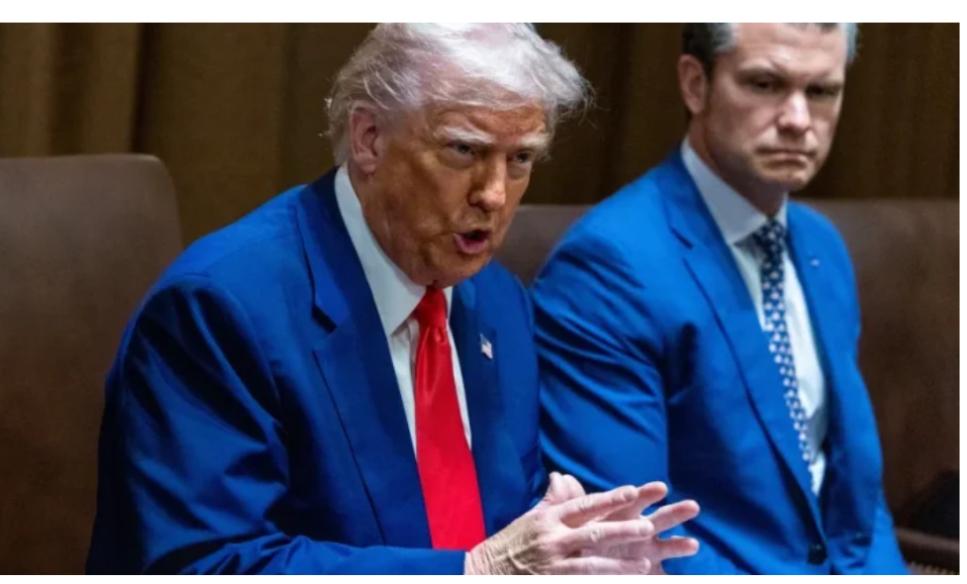
US President Donald Trump has declared the ceasefire with Iran effectively over after fresh clashes erupted in the Strait of Hormuz, raising fears of a renewed conflict and sending global oil prices sharply higher.
Speaking at a NATO summit on Wednesday, Trump dismissed hopes of preserving the truce, saying he no longer believed negotiations with Tehran were worthwhile. His remarks came after Iran launched attacks on commercial vessels in the strategic Strait of Hormuz, prompting a new wave of US military strikes and Iranian retaliation across the Gulf.
Iran, which insists it has the right to regulate traffic through the vital shipping route and impose transit fees, has threatened ships that fail to follow its approved passage. In recent days, its military reportedly targeted at least three vessels, triggering US strikes on more than 80 Iranian military sites, including air defence systems, coastal radar installations and dozens of Revolutionary Guard boats. According to US Central Command (CENTCOM), the operation was aimed at weakening Iran’s ability to disrupt international maritime trade.
Iran responded by claiming it struck multiple US military facilities in Kuwait and Bahrain. Explosions were also reported in several Iranian cities, including Qeshm, Sirik, Bandar Abbas and Bushehr, home to the country’s only civilian nuclear power plant. Iranian state media also confirmed the death of a Revolutionary Guards member during the attacks.
The latest escalation has placed renewed strain on the interim US-Iran agreement reached last month. Iran accused Washington of violating the deal by reinstating oil sanctions and reversing waivers that previously allowed limited crude exports. A US official maintained the agreement was performance-based and warned Iran would only benefit if it complied with its commitments.
The maritime crisis has also intensified after three commercial vessels — the Marshall Islands-flagged Al Rekayyat, the Saudi Arabia-flagged Wedyan and the Liberia-flagged Cyprus Prosperity — were struck near Oman. Qatar condemned the attack on the Al Rekayyat and lodged a diplomatic protest with Iran, while Tehran rejected the accusations.
Security analysts say Iran’s actions are intended to reinforce its demand for greater control over the Strait of Hormuz and oppose alternative shipping arrangements proposed by Oman. Although maritime traffic briefly resumed after last month’s agreement, tensions remain high as both sides continue to dispute the future administration of one of the world’s most critical oil transit routes.