
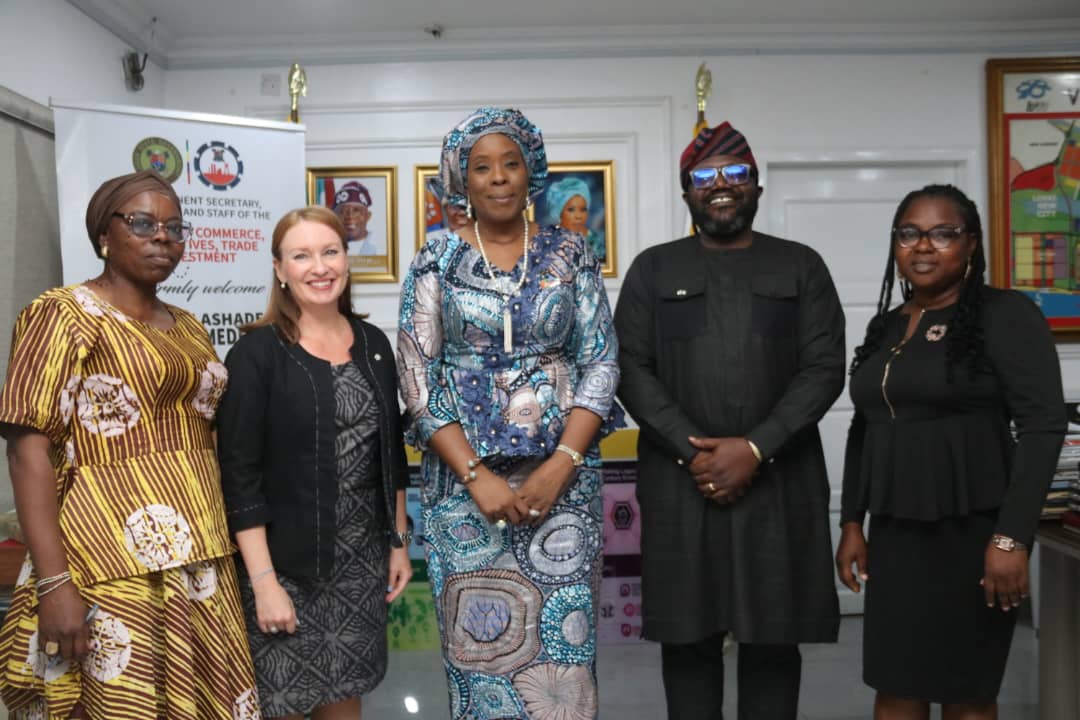
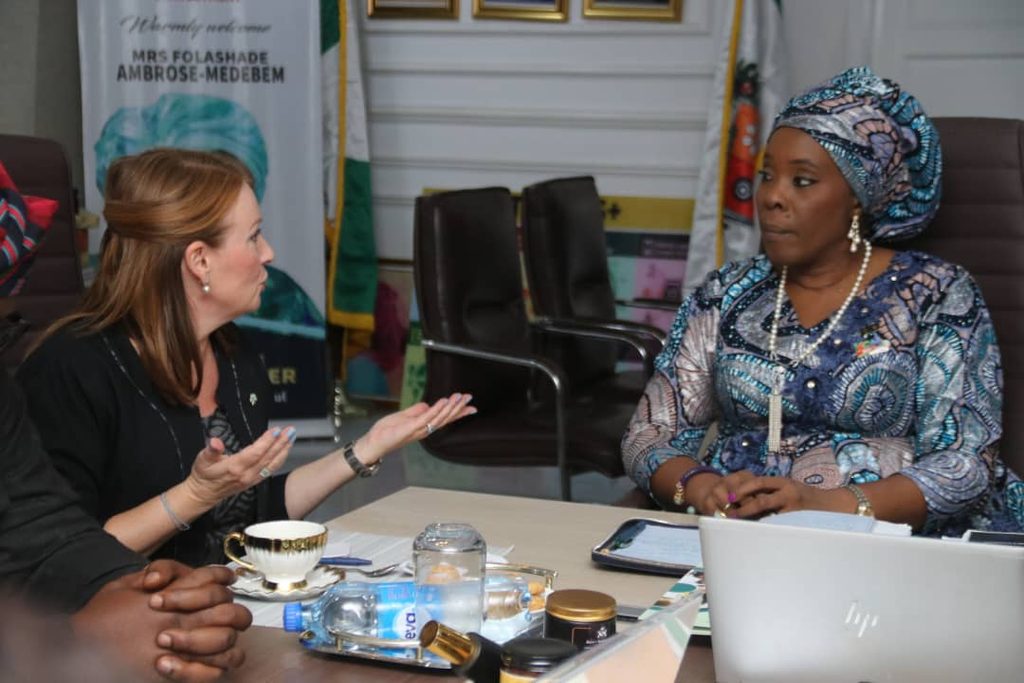
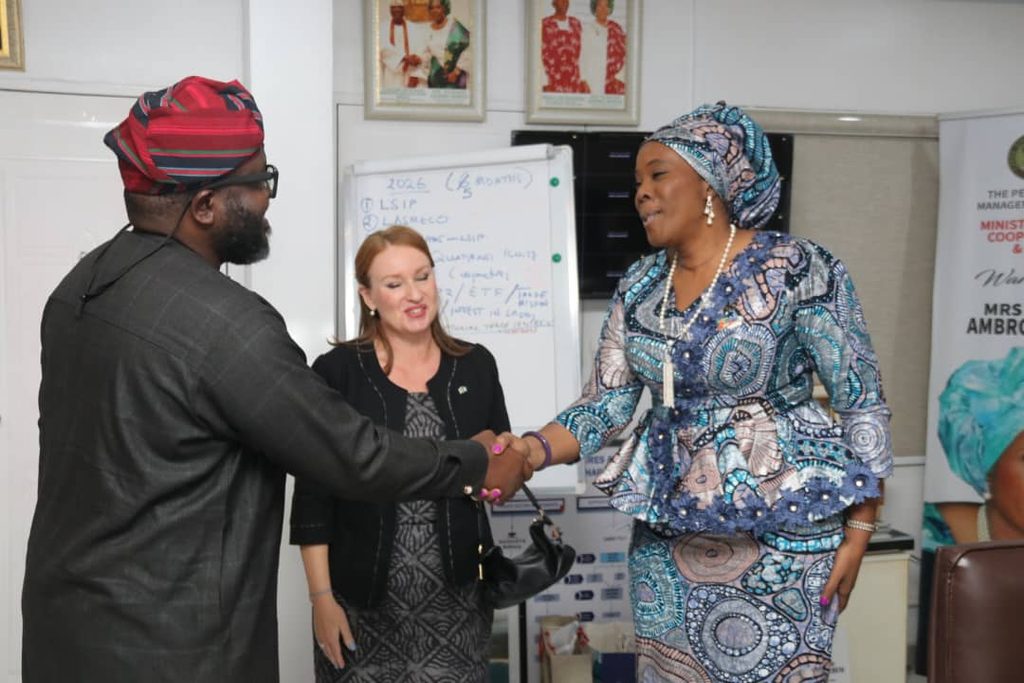
Finland’s Ambassador to Nigeria, Her Excellency Sanna Selin, has visited the Lagos State Ministry of Commerce, Cooperatives, Trade and Investment (MCCTI), where she met with the Commissioner, Folashade Ambrose-Medebem, to explore opportunities for deeper bilateral trade, investment and technology cooperation.
The meeting focused on Finland’s potential participation in Lagos State’s industrial transformation, trade facilitation and investment agenda.
Receiving the delegation, Ambrose-Medebem outlined the Ministry’s responsibilities, including developing policies on commerce, industry, cooperatives and investment; supporting small and medium-sized enterprises (SMEs); overseeing the development of free trade zones, ports, airports and industrial parks; and attracting investments into Lagos.
She highlighted the Lagos State Export Readiness Programme (LASERP), which is designed to prepare local SMEs for African Continental Free Trade Area (AfCFTA) requirements and is projected to generate an additional $1 billion in annual foreign exchange inflows within five years.
The Commissioner also highlighted the Lagos State Industrial Policy (LSIP) 2025–2030, which targets increased manufacturing competitiveness and a 10.2 per cent contribution to the state’s real GDP by 2026. The policy is built around six pillars: industrial development, business environment, SME development, infrastructure and clusters, skills and innovation, and green and inclusive industrialisation.
She further drew attention to the Lekki Deep Seaport, Nigeria’s first deep-water port, which has attracted major global shipping companies including MSC, Maersk, CMA CGM and COSCO since commercial operations began in 2023. The port handled more than 548,000 TEUs in 2025 and has been projected to contribute significantly to Nigeria’s economy and create about 170,000 jobs over its 45-year concession period.
The Lekki Free Trade Zone was also highlighted as a strategic investment location offering market access, infrastructure, policy incentives and proximity to the deep seaport for companies seeking access to Nigeria and the wider West African market.
Ambrose-Medebem also presented the Lagos State Development Plan 2052 (LSDP 2052), which contains 447 initiatives across 21 strategic sectors and is anchored on four pillars: a thriving economy, a human-centred city, modern infrastructure and effective governance. The plan aims to grow Lagos’ economy to between $800 billion and $1 trillion by 2052 through sustained policy implementation and increased private-sector participation.
She also highlighted the THEMES+ Agenda of Governor Babajide Sanwo-Olu, covering traffic management, education, technology, health, security and social inclusion, with emphasis on economic diversification, job creation, infrastructure development and private-sector participation.
The Commissioner invited Finland to participate in the Creative Africa Nexus (CANEX) Weekend 2026, scheduled for November 5–8 at the Wole Soyinka Centre for Cultural and Creative Arts in Lagos. The event is expected to attract more than 10,000 participants from Africa and the diaspora and will connect creative enterprises with investors, financiers, technology providers, distributors and international markets across nine sectors, including film, music, fashion, literature, arts, crafts and design, gastronomy and sports.
She particularly encouraged Finnish collaboration in creative industries, design and cultural exchange, noting that Finland’s expertise and innovation could support Lagos’ expanding creative economy.
Another major area discussed was water transportation. Ambrose-Medebem highlighted the €410 million Omi Eko Project, which is designed to establish an integrated inland waterways transportation system across Lagos. The project will develop 15 ferry routes covering about 140 kilometres, upgrade 25 ferry terminals and introduce 78 modern electric ferries, each capable of carrying up to 440 passengers.
The project aims to increase water transportation’s share of Lagos’ mobility system from less than one per cent currently to about eight per cent by 2032. The Commissioner said Finland’s expertise in maritime technology, sustainable transport, electric vessels, terminal infrastructure and intelligent transportation systems could support the project.
In her remarks, Ambassador Selin identified digitalisation, energy solutions, healthcare and smart technologies as areas where Finland could contribute to Lagos’ industrial and trade development. She noted that Finland and Nigeria have already signed a federal-level Memorandum of Understanding on digital cooperation covering digital government, connectivity, emerging technologies and innovation ecosystems.
She also disclosed Finland’s plan to establish a trade office in Lagos to strengthen its connection with commercial opportunities in Lagos and Nigeria’s southern economic belt.
The meeting also highlighted potential cooperation in clean technology, digital infrastructure, vocational education, SME export development, manufacturing within the Lekki Free Trade Zone and port logistics.
Ambassador Selin was accompanied by Mr Bankole Oloruntoba, Honorary Consul of Finland in Lagos and Chief Executive Officer of the Nigeria Climate Innovation Center (NCIC), whose work focuses on green innovation and the circular economy.
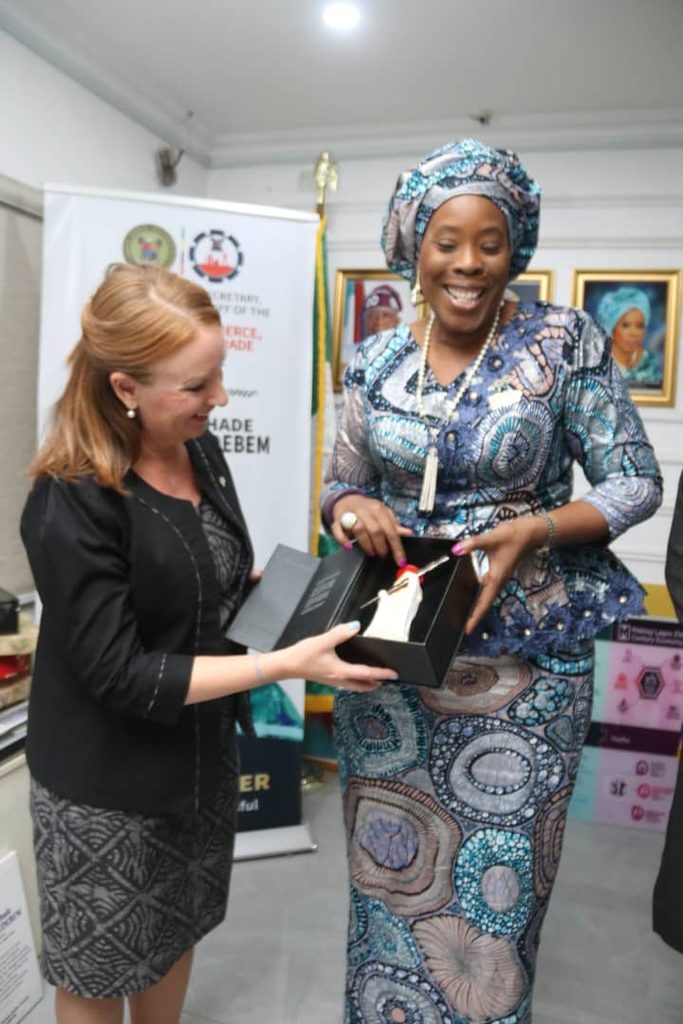
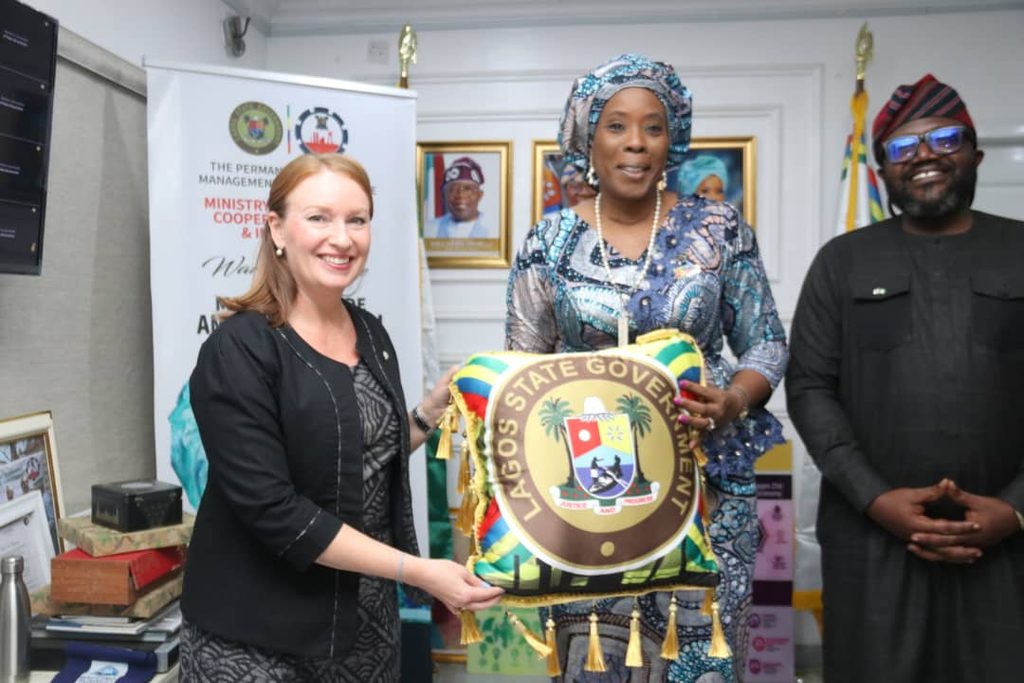
The visit concluded with the presentation of symbolic gifts to the Finnish delegation. Ambrose-Medebem presented Ambassador Selin with an Eyo Effigy and a branded throw pillow.
The Commissioner explained that the Eyo Effigy represents Lagos’ cultural heritage and the historic Eyo Festival, with the Eyo masquerade symbolising peace, communal harmony and the state’s traditional institutions. She described the gift as a gesture of welcoming Finland into Lagos’ cultural story as both sides pursue stronger economic ties.
She added that the branded throw pillow represented comfort, partnership and Lagos’ hospitality, while also reflecting the creative and manufacturing potential of the state’s SME sector, particularly in textiles, home décor and branded merchandise.
Ambassador Selin expressed appreciation for the gifts, describing them as a meaningful insight into Lagos’ cultural richness and growing creative economy.