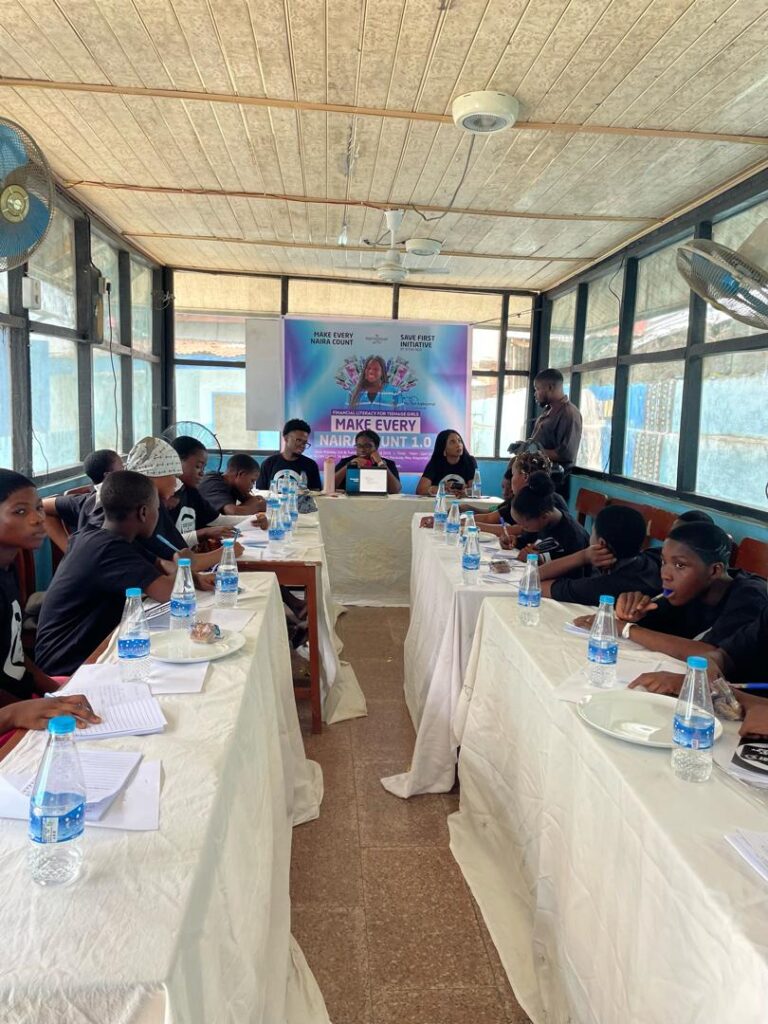



Not fewer than thirty (30) teenage girls between the ages of 15 and 17 in Yaba, Lagos State, have been equipped with practical financial literacy skills and cash support through an intervention by the Founder of Make Every Naira Count, Miss Oluwatariiresimi Agbeyangi, a student entrepreneur. The initiative is designed to help beneficiaries make informed financial decisions, cultivate healthy money management habits and build a secure future.
The beneficiaries received financial literacy training during a two-day programme organised by Make Every Naira Count in partnership with the Save First Initiative of the Street Child Care and Welfare Initiative (SCCWI).
Speaking at the programme, the Founder of Make Every Naira Count, Miss Oluwatariiresimi Agbeyangi, explained that the intervention, targeted at teenage girls from underserved communities in the Yaba area, also provided cash grants to enable the beneficiaries begin their entrepreneurial journeys and become more financially independent.

She explained that her decision to reach out to the girls was driven by a desire to give them hope and support the efforts of the Project Director of the Street Child Care and Welfare Initiative, Mrs. Comfort Ali, who has been caring for young girls affected by unintended pregnancies, homelessness and other vulnerabilities associated with life on the streets.
Agbeyangi said the initiative was conceived to expose young girls to sound financial management principles at an early age, enabling them to make responsible financial decisions as they transition into adulthood.
A secondary school student and young entrepreneur, Agbeyangi explained that her passion for financial empowerment was inspired by her experience of running a bakery business, where proceeds from the sale of cookies are used to provide diapers, baby wipes and other essential items for young mothers in hospitals.
According to her, empowering girls with financial knowledge is just as important as providing material support because it equips them with the confidence, discipline and practical skills needed to navigate life’s financial challenges.
She noted that participants were deliberately selected from the 15 to 17-year age group because they are at a critical stage of development, when they begin to make independent decisions and require practical financial knowledge to prepare for adulthood.
She added that the intervention complements her previous initiatives, through which she has used her personal resources to provide essential hospital supplies for teenage mothers who cannot afford sanitary materials, diapers and other necessities for themselves and their newborns.
During the interactive sessions, participants were introduced to the principles of budgeting, saving, and distinguishing between needs and wants. They were encouraged to cultivate the habit of setting aside a portion of every income, planning for emergencies and developing long-term financial goals.
Agbeyangi also educated the girls on financial safety, cautioning them against sharing sensitive personal banking information such as their Bank Verification Number (BVN), National Identification Number (NIN), ATM PIN, or allowing anyone to photograph their ATM cards. She further advised them to always verify account details before carrying out financial transactions to avoid becoming victims of fraud.
Also speaking, the President and Project Director of the Street Child Care and Welfare Initiative, Mrs. Comfort Ali, described financial literacy as an essential life skill that should be introduced early. She stressed that cultivating a savings culture from adolescence prepares young people for financial independence and responsible financial behaviour in adulthood.
According to her, the programme extended beyond saving and budgeting to include accountability, financial discipline, sustainability, goal-setting and personal development. She encouraged participants to be intentional about saving, irrespective of how little they receive, noting that every naira saved contributes to long-term financial security.
Mrs. Ali also urged parents and guardians to encourage their children to save part of their allowances, monetary gifts and other sources of income, stressing that early financial discipline lays the foundation for responsible financial behaviour in adulthood.
One of the participants, Okpara Blessing Ada, who aspires to become a business owner, described the programme as timely and impactful. She revealed that she currently saves monetary gifts received from family members through a local thrift savings scheme and hopes to open a bank account soon, adding that the knowledge gained from the training would help her better prepare for future financial responsibilities.
Another participant, Whesu Olamide Happiness, a 16-year-old aspiring accountant, said the training had deepened her understanding of budgeting and financial planning.
“Saving is not about how much you earn, but about preparing for future needs and emergencies,” she said, while encouraging fellow teenagers to cultivate the habit of saving consistently and spending wisely.